
Why do we follow rituals such as Namaste, lighting a diya, ringing temple bells, eating with our hands, making Rangoli or applying Mehndi? The Science Behind Rituals series explores Indian traditions through the perspectives of science, psychology, culture and traditional wisdom—while distinguishing scientific evidence from cultural belief.
ANCIENT TRADITIONS • MODERN SCIENCE
Discover the Science Behind Indian Rituals
5 Books • 50+ Traditions • One Fascinating Journey
Explore the stories, possible scientific reasoning, psychology and cultural wisdom behind India’s everyday rituals and traditions.
By Tushar Sir & Shweta Ma’am
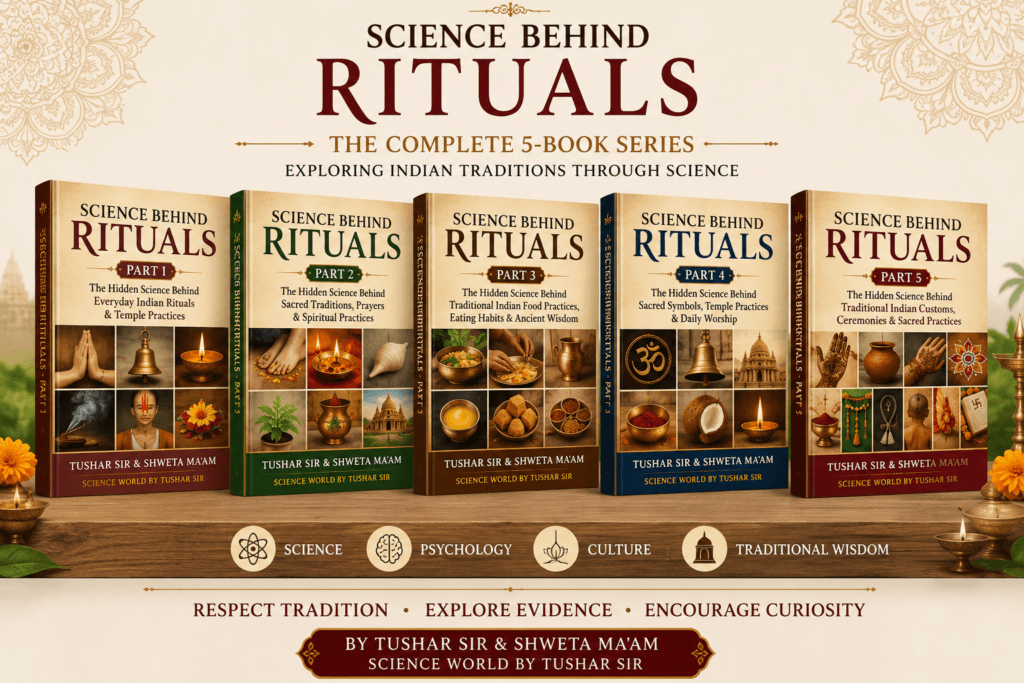
ABOUT THE SERIES
What Is the Science Behind Rituals Series?
Indian traditions have been passed from generation to generation for centuries. But have you ever stopped to ask why these practices exist? The Science Behind Rituals series explores familiar Indian customs through multiple perspectives—including science, psychology, history, culture and traditional wisdom.
Some practices have practical explanations supported by established scientific principles. Others may carry psychological, social or environmental significance. And some remain primarily matters of faith, symbolism and cultural tradition. The series encourages readers not simply to believe or reject—but to question, investigate and understand.
Respect Tradition • Explore Evidence • Encourage Curiosity
Why Explore Indian Traditions Through Science?
Science can help explain measurable physical phenomena. Psychology can help us understand behaviour and emotional experience. History and culture help explain how traditions developed and what they mean to communities.
Not every ancient practice needs a scientific explanation to have cultural value—and not every popular “scientific” explanation is scientifically established.
SCIENCE BEHIND RITUALS
Explore the Science Behind Rituals
Explore our collection of articles examining familiar Indian rituals through the lenses of science, psychology, culture, and everyday experience.
SCIENCE BEHIND RITUALS
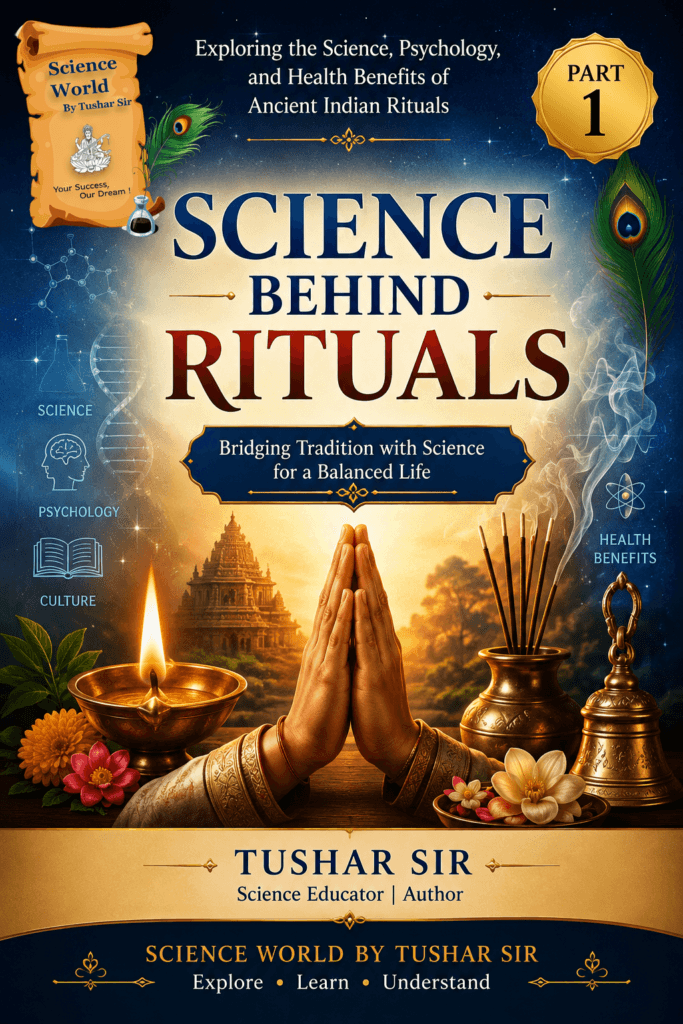
The Science Behind Rituals Part 1
Have you ever wondered why we fold our hands while saying Namaste, why we remove our shoes before entering a temple, why we ring a temple bell, or why we light a diya during पूजा?
- Namaste
- Removing shoes before entering a temple
- Ringing temple bells
- Applying tilak
- Lighting a diya
- Burning camphor
- Using incense sticks
- Offering flowers
- And more
Science Behind Rituals Part – 1
Science Behind Rituals Part 2
SCIENCE BEHIND RITUALS
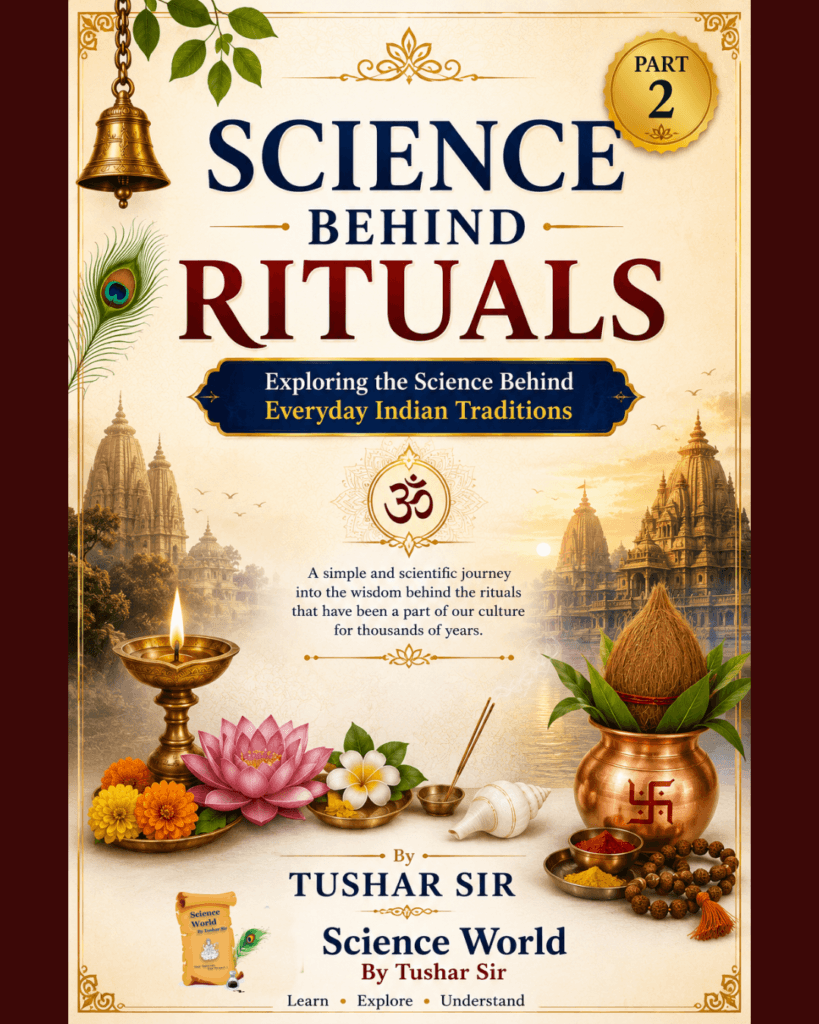
Science Behind Rituals Part 2
Have you ever wondered why we touch the feet of elders, why we perform Aarti, why we blow a conch during पूजा, or why Tulsi and Peepal trees are considered sacred?
- Why do we touch the feet of elders?
- Why do we perform Aarti?
- Why do we blow the conch?
- Why is Tulsi worshipped?
- Why is the Peepal tree considered sacred?
- Why do we chant mantras?
- Why is Ganga water considered special?
- Why do we keep a Kalash during worship?
- Why do we observe silence during prayer?
- Why do we visit temples?
SCIENCE BEHIND RITUALS
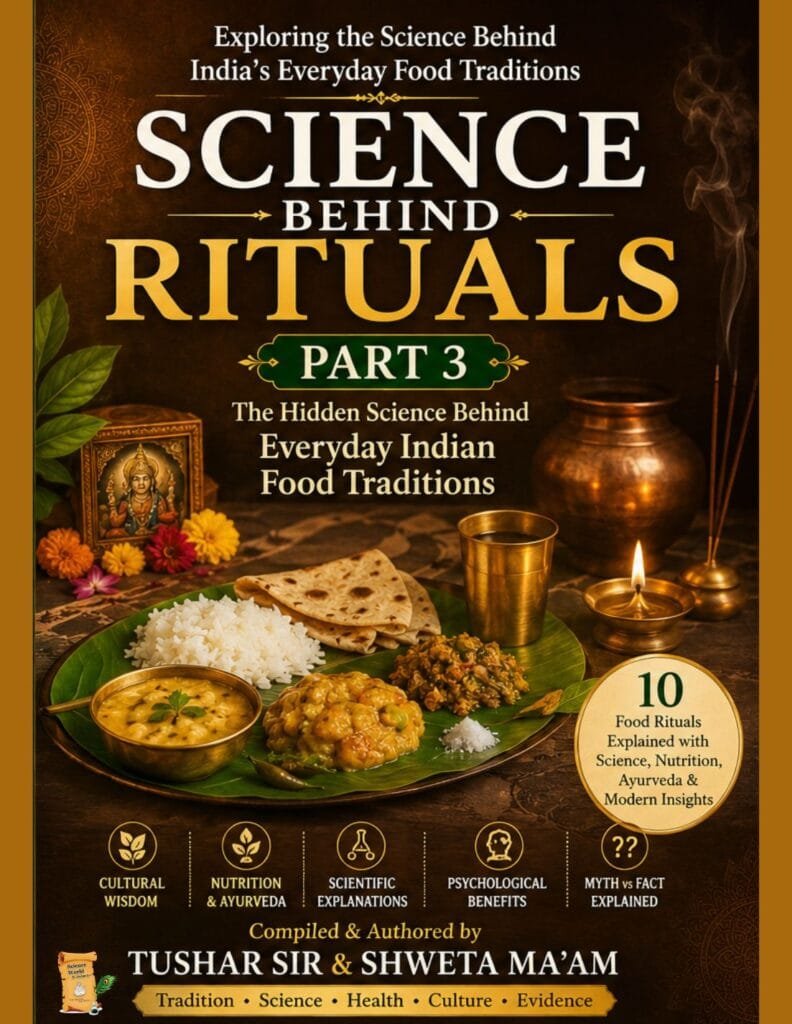
The Science Behind Rituals Part 3
Have you ever wondered why food is first offered to God before eating, why Indians traditionally eat with their hands, why water is stored in copper vessels, or why food is served on banana leaves?
- Why is food offered to God before eating?
- Why do Indians eat with their hands?
- Why is water stored in copper vessels?
- Why is food served on banana leaves?
- Why do we sit on the floor while eating?
- Why is curd eaten before auspicious events?
- Why is ghee considered sacred?
- Why are fasting foods different from daily meals?
- Why is jaggery traditionally eaten after meals?
- Why are spices such as turmeric, and black pepper used so frequently?
Science Behind Rituals Part – 3
Science Behind Rituals Part 4
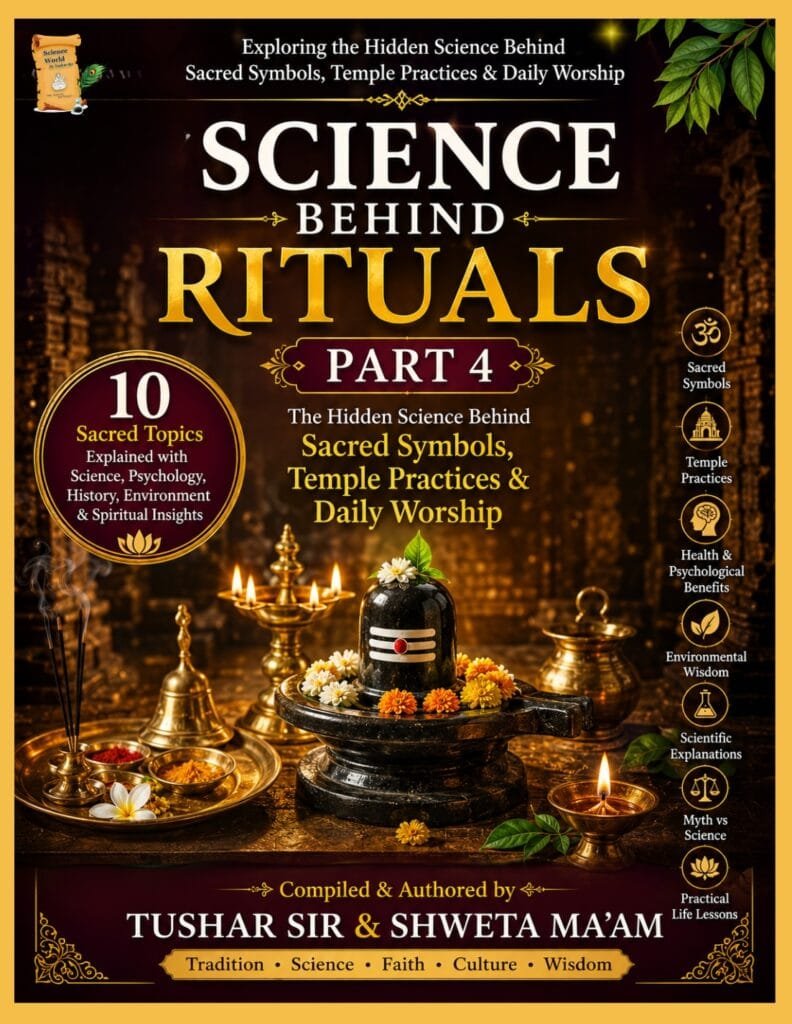
SCIENCE BEHIND RITUALS
Science Behind Rituals Part 4
Science Behind Rituals – Part 4 explores ten familiar Indian religious and cultural practices and examines them through the lenses of tradition, psychology, hygiene, acoustics, symbolism, and human behavior.
- Why Should Tilak Be Applied with the Thumb?
- Why Do We Join Our Hands in Namaste?
- Why Is the Temple Bell Rung Before Prayer?
- Why Do We Circumambulate (Pradakshina) Around a Temple?
- Why Is Kumkum Applied on the Forehead?
SCIENCE BEHIND RITUALS
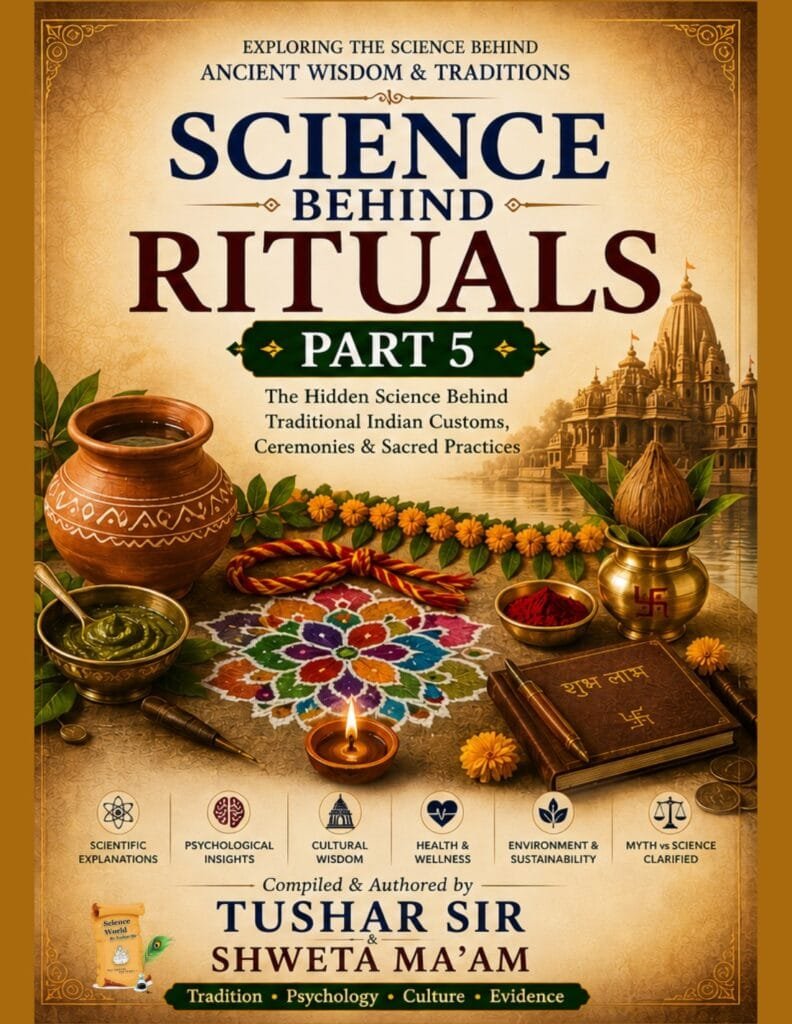
The Science Behind Rituals Part 5
Have you ever wondered why food is first offered to God before eating, why Indians traditionally eat with their hands, why water is stored in copper vessels, or why food is served on banana leaves?
- Why is food offered to God before eating?
- Why do Indians eat with their hands?
- Why is water stored in copper vessels?
- Why is food served on banana leaves?
- Why do we sit on the floor while eating?
- Why is curd eaten before auspicious events?
- Why is ghee considered sacred?
- Why are fasting foods different from daily meals?
- Why is jaggery traditionally eaten after meals?
- Why are spices such as turmeric, and black pepper used so frequently?
Science Behind Rituals Part – 5
One Series. Many Ways to Understand Tradition.
SCIENCE
Explore physics, chemistry, biology and environmental principles where they genuinely apply
PSYCHOLOGY
Understand behaviour, attention, symbolism, habits and emotional experiences.
CULTURE
Discover how customs connect generations, communities and celebrations.
TRADITIONAL WISDOM
Explore beliefs and practices passed down through generations while distinguishing tradition from scientific evidence.
Does Every Indian Ritual Have a Scientific Reason?
Scientifically Explainable
Practices involving observable physical or biological processes can sometimes be explained using established science.
Psychological Benefits
Some customs may have reasonable behavioural, environmental or social interpretations, even where direct scientific evidence is limited.
Spiritual Beliefs
Other practices derive their significance primarily from religion, symbolism, identity and tradition.
The Science Behind Rituals series separates evidence, interpretation and traditional belief instead of presenting them as the same thing.
Who Should Explore This Series?
Students
Discover science beyond textbooks.
Parents & Families
Discuss traditions with younger generations
Teachers & Educators
Find engaging science-and-culture discussion ideas
Meet the Authors
Tushar Sir & Shweta Ma’am
Tushar Sir & Shweta Ma’am are educators passionate about making science interesting, accessible and connected with everyday life.
Through the Science Behind Rituals series, they encourage readers to explore India’s cultural traditions with curiosity, respect, evidence and critical thinking.
Science World By Tushar Sir
FAQs – Science Behind Rituals
1. What is Science Behind Rituals?
Science Behind Rituals is an educational series that explores familiar Indian rituals and traditions through scientific, psychological, cultural, and practical perspectives. It encourages readers to understand the possible reasoning, experiences, and meanings associated with traditional practices.
2. Is there science behind Indian rituals?
Some Indian rituals involve elements that can be examined through science, such as light, sound, fragrance, human behaviour, attention, memory, hygiene, and environmental factors. However, not every traditional or spiritual belief should be presented as scientifically proven. The aim is to distinguish evidence-based explanations from cultural and spiritual interpretations.
3. Why do we light a diya during पूजा and other rituals?
Lighting a diya has important cultural and spiritual symbolism. From a practical and psychological perspective, the flame also creates a distinct visual focus and can help mark the transition into prayer, meditation, or another ritual activity.
4. Why are bells rung in temples?
Temple bells have traditional and spiritual significance. Their distinctive sound also immediately attracts attention and changes the surrounding sensory environment, which can help people shift their focus toward the ritual or worship taking place.
5. What is the purpose of burning incense during rituals?
Incense has traditionally been used to create a distinctive fragrance and atmosphere during worship. Smell is strongly connected with memory and emotional associations, so familiar fragrances can become associated with prayer and ritual settings. Incense also produces smoke, however, so good ventilation and responsible use are important.
6. Does Science Behind Rituals prove that every ancient Indian ritual is scientific?
No. The purpose of Science Behind Rituals is not to claim that every ancient practice has been scientifically proven. It explores where scientific or psychological explanations may be relevant while also recognising the cultural, historical, symbolic, and spiritual dimensions of traditions.
7. What can I learn from the Science Behind Rituals articles?
The articles explore questions about everyday Indian traditions, including why particular objects, sounds, fragrances, foods, movements, and practices became associated with rituals. Each article encourages curiosity and separates scientific explanations from cultural interpretations where appropriate.
8. Where can I learn more about the Science Behind Rituals?
You can explore the articles available on this page for individual topics. For a more detailed exploration, you can also read Science Behind Rituals – Part 1 by Tushar Sir, which examines a collection of familiar Indian rituals from scientific, psychological, health, and cultural perspectives.
EXPLORE • QUESTION • UNDERSTAND
Discover the Science Behind India’s Timeless Traditions
From everyday customs to temple practices, food traditions and sacred ceremonies, begin your journey through the complete Science Behind Rituals collection.