
Introduction
NCERT Solutions for Class 9 Science Chapter 9, Atomic Foundations of Matter, help students understand how atoms form the foundation of matter and how elements and compounds are represented and described. This chapter from the new NCERT textbook, Exploration: A Textbook of Science for Grade 9, builds on the ideas of atomic structure and develops students’ understanding of the composition of matter.
The solutions provide clear explanations for the questions and activities in the textbook. Students can use them to understand important concepts, practise problems, revise key ideas, and prepare effectively for examinations.
NCERT Intext Solution
(For questions see the NCERT)
1. Question
Answer: No, the Law of Conservation of Mass is not violated.
When ethanol burns in air, it reacts with oxygen to form carbon dioxide and water vapour:

Since the reaction occurs in an open beaker, the products (carbon dioxide and water vapour) escape into the air. Therefore, no residue is left in the beaker. If the masses of ethanol, oxygen, carbon dioxide, and water vapour are all considered, the total mass before and after the reaction remains the same.
2. Question
Answer: According to the Law of Conservation of Mass,

Mass of hydrogen = 20 g
Mass of oxygen = 160 g
Therefore, 180 g of water is formed.
3. Question
Answer: Sulphur: Oxygen = 40: 60 = 2: 3
If sulphur = 20 g,
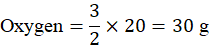
Therefore, 30 g of oxygen must be present.
4. Question
Answer: Carbon: Oxygen = 3: 4
If carbon = 9 g,
Therefore, 12 g of oxygen will combine with 9 g of carbon.
5. Question
Answer: In a compound, elements are chemically combined in a fixed ratio by mass, so the composition is always the same.
In a mixture, substances are physically mixed and can be present in any proportion, so the composition is not fixed.
Therefore, the Law of Definite Proportions applies to compounds but not to mixtures.
6. Question
Answer: For Student X:
For Student Y:
Both students obtained the same mass ratio (4:1) of copper to oxygen.
Hence, their results justify the Law of Constant Proportions, which states that a compound always contains the same elements combined in a fixed ratio by mass.
Answer: (i) Both A and R are true, and R is the correct explanation of A.
Explanation:
Assertion (A):
2 g of hydrogen combines with 16 g of oxygen to form 18 g of water.

Mass of hydrogen = 2 g
Mass of oxygen = 16 g
Mass of water formed = 2 + 16 = 18 g
So, Assertion (A) is true.
7.Question
Reason (R):
According to Dalton’s Atomic Theory, atoms combine in simple whole-number ratios to form compounds.
In water, hydrogen and oxygen atoms combine in a fixed ratio (H₂O), which supports the given mass relationship.
So, Reason (R) is also true and correctly explains why elements combine in fixed proportions to form water.
Correct Option:
(i) Both A and R are true, and R is the correct explanation of A.
8. Question
Answer: Each nitrogen atom has 5 valence electrons and needs 3 more electrons to complete its octet. Therefore, two nitrogen atoms share three pairs of electrons, forming a triple covalent bond.
Lewis Structure:
: N ≡ N:
Each nitrogen atom has one lone pair of electrons and shares three pairs of electrons.
9. Question
Answer: Fluorine has atomic number 9 and electronic configuration 2,7. Thus, each fluorine atom has 7 valence electrons and needs 1 more electron to complete its octet.
Two fluorine atoms share one pair of electrons, forming a single covalent bond.
Lewis Structure:
F. — .F
or
.. ..
:F . .F:
.. ..
Each fluorine atom shares one electron and attains a stable octet.
Therefore, F₂ is formed by the sharing of one pair of electrons between two fluorine atoms.
10. Question
(i) Carbon Dioxide (CO₂)
Carbon has 4 valence electrons.
Each oxygen atom has 6 valence electrons and needs 2 more electrons.
Carbon shares two pairs of electrons with each oxygen atom, forming two double covalent bonds.
Structure: O = C = O
(Lewis’s structure: each oxygen has two lone pairs.)
(ii) Hydrogen Sulphide (H₂S)
Sulphur has 6 valence electrons and needs 2 more electrons.
Each hydrogen has 1 electron and needs 1 more electron.
Sulphur shares one electron with each hydrogen atom, forming two single covalent bonds.
Structure: H — S — H
(Sulphur has two lone pairs of electrons.)
(iii) Ammonia (NH₃)
Nitrogen has 5 valence electrons and needs 3 more electrons.
Three hydrogen atoms each contribute 1 electron.
Nitrogen shares one electron with each hydrogen atom, forming three single covalent bonds.
Structure:
H
|
H — N:
|
H
(The pair of dots: represents the lone pair on nitrogen.)
11. Question
Answer: Neon has atomic number 10 and electronic configuration 2, 8.
Its outermost shell already contains 8 electrons (complete octet).
Therefore, neon is stable and has zero valency.
Since it already has a complete valence shell, it does not need to gain, lose, or share electrons.
Hence, neon neither transfers nor shares its valence electrons and remains chemically inert (unreactive).
12. Question
Answer: Oxygen gains two electrons and forms an oxide ion, O²⁻ (anion).
13. Question
Among magnesium and chlorine, magnesium atom can give two electrons to become Mg²⁺. However, chlorine can take only one electron to become Cl⁻. Now, two chloride (Cl⁻) ions of chlorine combine with one magnesium (Mg²⁺) ion to give magnesium chloride.
Answers to blanks:
Cl⁻
Two chlorides (Cl⁻)
One magnesium (Mg²⁺)
14. Question
(a) Formation of Potassium Chloride (KCl)
Formation of cation:
Formation of anion:

Formation of compound:

(b) Formation of Calcium Chloride (CaCl₂)
Formation of cation:
Formation of anions:

Formation of compound:

15. Question
Formation of sodium ions:

Formation of sulphide ion:
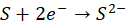
Formation of sodium sulphide:

Electron configuration method:
Na (2,8,1) → Na⁺ (2,8)
S (2,8,6) → S²⁻ (2,8,8)
Thus, two sodium atoms transfer one electron each to sulphur atom, forming Na₂S.
16. Question
(i) CO₂ – Carbon dioxide
(ii) NO₂ – Nitrogen dioxide
(iii) SF₆ – Sulphur hexafluoride
(iv) PCl₃ – Phosphorus trichloride
17. Question
(i) Sodium hydrogen carbonate – NaHCO₃
(ii) Sulphur dioxide – SO₂
(iii) Ferric chloride – FeCl₃
(iv) Cuprous oxide – Cu₂O
18. Question
(i) Fe³⁺ and OH⁻
Charge balance:
Fe³⁺ + 3OH⁻ → Fe(OH)₃
Answer: Fe(OH)₃ (Ferric hydroxide)
(ii) K⁺ and CO₃²⁻
19. Question
Answer: The compound contains an ionic (electrovalent) bond. Ionic compounds do not conduct electricity in the solid state because ions are fixed in position, but they conduct electricity in aqueous solution because the ions become free to move.
20. Question
(i) Formula
Since the metal has two valence electrons, it forms M²⁺ ions. Oxygen forms O²⁻ ions. Therefore, the formula of the compound is: MO
(ii) Type of bond
The compound is formed by transfer of electrons from the metal to oxygen, so it contains an:
Ionic (electrovalent) bond
(iii) Electrical conductivity of its aqueous solution
The compound partially dissolves in water and produces ions. Hence, its aqueous solution:
Conducts electricity (though weakly because it is only slightly soluble).
21. Question
Given:
H = 1 u
N = 14 u
O = 16 u


 Answer: Molecular mass of HNO₃ = 63 u
22. Question
Given:
C = 12 u
H = 1 u

 Answer: Molecular mass of CH₄ = 16 u
23. Question
Given:
Atomic mass of K = 39 u
Atomic mass of Cl = 35.5 u

 Answer: Formula unit mass of KCl = 74.5 u
24. Question
Given: Atomic mass of Mg = 24 u
Atomic mass of O = 16 u
Atomic mass of H = 1 u

Answer: Formula unit mass of Mg(OH)₂ = 58 u.
NCERT Exercise Solution
1. Question
(i) 1 electron
(ii) Positive ion (A⁺)
(iii) 2 electrons
(iv) Negative ion (B²⁻)
(v) Ionic (electrovalent) bond
(vi) A₂B
2. Question
(i) Because each atom needs two more electrons to complete its octet, so two atoms share electrons.
(ii) Covalent bond.
(iii) Structure of X₂ (like O₂):
X = X
(iv) Structure of compound formed with Y:
X = Y = X
3. Question
(iii) 2 Fe³⁺ and 3 O²⁻
(Positive charge = +6, Negative charge = –6)
4. Question
(i) False
Correct statement: Elements are made up of atoms (or molecules), and compounds are made up of molecules (or ions).
(ii) False
Correct statement: A compound is made up of two or more atoms of different kinds.
(iii) False
Correct statement: One molecule of nitrogen gas contains two nitrogen atoms (N₂).
(iv) True
5. Question
(i) Aluminium nitrate
Al(NO₃)₃
(ii) Calcium oxide
CaO
(iii) Ferric oxide
Fe₂O₃
6. Question
(i) Ca²⁺ and Br⁻
CaBr₂
(ii) Al³⁺ and CO₃²⁻
Al₂(CO₃)₃
(iii) K⁺ and SO₄²⁻
K₂SO₄
(iv) NH₄⁺ and Cl⁻
NH₄Cl
7. Question
Electronic configuration of Cl = 2, 8, 7
Electronic configuration of Cl⁻ = 2, 8, 8
Correct figure: (iii)
8. Question
(i) Ammonium nitrate (NH₄NO₃)
Atomic masses: H = 1 u, N = 14 u, O = 16 u
 = 28 + 4 + 48 = 80 u
(ii) Phosphoric acid (H₃PO₄)
Atomic masses: H = 1 u, P = 31 u, O = 16 u
= 3 + 31 + 64
= 98 u
(iii) Sodium hydrogen carbonate (NaHCO₃)
Atomic masses: Na = 23 u, H = 1 u, C = 12 u, O = 16 u

= 23 + 1 + 12 + 48 = 84 u
9. Question
(i) Magnesium and nitrogen Mg²⁺ and N³⁻
Mg₃N₂
(ii) Lithium and nitrogen Li⁺ and N³⁻
Li₃N
(iii) Sodium and sulphur Na⁺ and S²⁻
Na₂S
(iv) Aluminium and oxygen Al³⁺ and O²⁻
Al₂O₃
10. Question
| Cation | NO₃⁻ | SO₄²⁻ | PO₄³⁻ |
| NH₄⁺ | NH₄NO₃ | (NH₄)₂SO₄ | (NH₄)₃PO₄ |
| Li⁺ | LiNO₃ | Li₂SO₄ | Li₃PO₄ |
| Al³⁺ | Al(NO₃)₃ | Al₂(SO₄)₃ | AlPO₄ |
| Cu²⁺ | Cu(NO₃)₂ | CuSO₄ | Cu₃(PO₄)₂ |
11. Question
Mass of reactants
= 5.3 g + 6.0 g = 11.3 g
Mass of products
= 2.2 g + 0.9 g + 8.2 g = 11.3 g
Since mass of reactants = mass of products,
Law of conservation of mass is verified.
12. Question
(i) Atomic number and mass number
Atomic number = Number of protons = 11
Mass number = Protons + Neutrons
= 11 + 12 = 23
(ii) Is it neutral, a cation or an anion?
Protons = 11
Electrons = 10
Since protons > electrons by 1, It is a cation (+1 charge).
(iii) Electronic configuration
10 electrons
Electronic configuration = 2, 8
(iv) Name the species
Atomic number 11 corresponds to Sodium (Na).
Since it has lost one electron,
Species = Sodium ion (Na⁺).
13. Question
A = 2, 8, 5
B = 2, 8, 7
(i) More reactive element: B (needs only 1 electron to complete octet).
(ii) They form a covalent bond by sharing electrons.
A has 5 valence electrons and needs 3 more.
B has 7 valence electrons and needs 1 more.
One A atom shares electrons with three B atoms.
(iii) Formula of the compound: AB₃ (e.g., PCl₃ type).
14. Question
Assertion (A): Copper sulphate conducts electricity in molten state but not in solid state. True
Reason (R): Copper and sulphate ions are fixed in the lattice in molten state, while in solid state they can move freely. False
Actually, ions are fixed in the solid state and move freely in the molten state.
Answer: (iii) A is true, but R is false.
15. Question
²⁷Al → Protons = 13, Electrons = 13, Neutrons = 27 − 13 = 14
⁸⁰Br⁻ → Protons = 35, Electrons = 36, Neutrons = 80 − 35 = 45
²⁰¹Hg²⁺ → Protons = 80, Electrons = 78, Neutrons = 201 − 80 = 121
Chapter Overview
Class 9 Science Chapter 9 – Atomic Foundations of Matter
This chapter develops the connection between atoms and the matter around us. After studying the structure of the atom in the previous chapter, students explore how atoms combine and how matter can be described in terms of its basic constituents.
The chapter introduces the ideas needed to understand elements, compounds, atomic representation, and the quantitative relationships involved in chemical substances, according to the current NCERT textbook.
It helps students build a foundation for understanding chemistry and the composition of matter in greater detail.
Class 9 Science Chapter 9 Important Topics
Include the concepts actually covered in your current textbook, such as:
- Atoms and matter
- Elements
- Compounds
- Symbols of elements
- Atomic representation
- Molecules
- Composition of substances
- Atomic mass
- Molecular mass
- Relative atomic mass
- Laws related to chemical combination
- Quantitative relationships between atoms and compounds
- Chemical formulae
Common Mistakes to Avoid in Chapter 9
Students should avoid:
- Confusing atoms with molecules.
- Confusing elements with compounds.
- Writing incorrect chemical symbols.
- Writing incorrect chemical formulae.
- Mixing up atomic mass and molecular mass.
- Skipping units in numerical answers.
- Memorising formulae without understanding what they represent.
- Making calculation errors when determining composition or mass.
FAQs
What is Chapter 9 of Class 9 Science?
Chapter 9 of the new Class 9 Science textbook is Atomic Foundations of Matter. It develops students’ understanding of how atoms form the basis of matter and introduces the concepts covered in the chapter related to the composition and representation of substances.
What are the important topics in Class 9 Science Chapter 9?
The important topics depend on the current NCERT edition but include the atomic foundations of matter and the concepts related to elements, compounds, atoms, molecules, and their representation and quantitative relationships.
What is an atom?
An atom is a fundamental unit of an element that retains the chemical identity of that element.
What is the difference between an element and a compound?
An element consists of one type of basic constituent, whereas a compound is formed when different elements combine chemically in definite proportions.
What is a molecule?
A molecule is a group of atoms held together by chemical bonds and capable of existing as an independent unit, where applicable to the substance being discussed.
How should I prepare Class 9 Science Chapter 9?
Read the NCERT chapter carefully, understand the definitions and examples, practise the textbook questions and activities, and work through numerical or formula-based questions step by step. Use NCERT Solutions to check your answers.
Are NCERT Solutions enough to study Chapter 9?
NCERT Solutions are useful for checking and understanding textbook questions, but students should also read the complete chapter and practise the concepts independently.
Is Chapter 9 important for the Class 9 Science exam?
Yes. Chapter 9 develops foundational chemistry concepts that are important for understanding the composition of matter and later topics in science.