
NCERT Solutions for Class 9 Science Chapter 7, Work, Energy, and Simple Machines, help students understand the relationship between force, work, and energy in everyday situations. This chapter from the new NCERT textbook, Exploration: A Textbook of Science for Grade 9, introduces important ideas related to mechanical work, different forms of energy, energy transformations, and the use of simple machines.
The solutions provide clear explanations for the questions and activities given in the textbook. Students can use them to understand concepts, solve numerical and application-based questions, revise important formulas, and prepare effectively for examinations.
NCERT Intext Solution
(For question see NCERT)
1. Question
Answer: No, she is not doing any work on the barbell.
Reason:
Work is done only when a force causes displacement.

While holding the barbell steady, the weightlifter applies an upward force, but the barbell does not move. Since displacement ( ) is zero,

Hence, the work done on the barbell is zero.
2. Question
Answer: The work done by friction is negative.
Reason:
Friction acts opposite to the direction of motion of the stack of coins. Since the force of friction and displacement are in opposite directions, the work done by friction is negative.
Since,
Therefore, the work done by friction is negative.
3.Question
Answer:
The chemical energy stored in our muscles is converted into mechanical (kinetic) energy, which makes the bicycle move. Part of this energy is also converted into heat energy due to friction between the moving parts and the tyres and the road, and a small amount is converted into sound energy.
Thus, the muscular energy appears mainly as:
- Kinetic (Mechanical) Energy – due to the motion of the bicycle.
- Heat Energy – produced because of friction.
- Sound Energy – produced by moving parts and contact with the road.
4.Question
Given:
- Mass of A =

- Mass of B =

- Kinetic energies are equal.
Using the formula for kinetic energy,
Let the velocities of A and B be  and
and  , respectively.
Since their kinetic energies are equal,
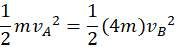
Cancelling  from both sides,

Taking square roots,

Therefore,

Answer: The ratio of the magnitudes of velocities of A and B is 2 : 1.
5. Question
Answer: No.
Reason: Kinetic energy depends only on the mass and velocity of an object.
 If the object moves with constant velocity, its speed remains unchanged. Since the mass also remains constant, the kinetic energy remains constant irrespective of the position of the object.
 6. Question
Answer: (a) Motion in the Horizontal Direction
No, the potential energy does not change.
Reason:
Gravitational potential energy depends only on the height of the object above the Earth’s surface.
When the object moves horizontally with constant velocity, its height  remains unchanged. Therefore, its gravitational potential energy remains constant.
(b) Motion in the Vertical Direction
Yes, the potential energy changes.
Reason:
As the object is gradually raised vertically, its height above the ground increases. Since
 an increase in height leads to an increase in potential energy.
Question
At the highest point, the ball has:
- Potential Energy =

- Kinetic Energy = 0
Hence, total mechanical energy = .
Just before the ball hits the ground:
- Height ≈ 0, so Potential Energy = 0
- Velocity =
Kinetic Energy
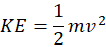
From the equation of motion,

Therefore,

Since PE = 0,
Hence, the mechanical energy of the ball just before it hits the ground is .
Answer (Q.8 – Pause and Ponder)
| Point | Potential Energy | Kinetic Energy |
| A (highest point) | Maximum | Minimum (almost zero) |
| B (lowest point) | Minimum | Maximum |
| C (next peak) | High, but less than at A | Low |
Reason for lower heights at C, D and E:
As the ball moves, some of its mechanical energy is lost due to friction and air resistance. This energy is converted into heat and sound. Therefore, after each oscillation, the ball cannot rise to the same height as before, so points C, D, and E are lower than the previous peaks.
Yes, the lower heights are due to energy lost because of friction. In the absence of friction, the ball would continue to reach the same height every time, and the total mechanical energy would remain constant.
Conclusion: Yes, the decreasing heights are due to the loss of mechanical energy caused by friction and air resistance.
9. Question.
Answer:
Roads on hills are built in gentle slopes because a sloping road acts as an inclined plane, which increases the distance over which a vehicle climbs and thereby reduces the force required to move upward.
Thus, winding roads make it easier and safer for vehicles to climb hills.
10. Question
Answer: An inclined ladder acts as an inclined plane. By increasing the distance over which we climb, it reduces the force (effort) required to reach the same height.
A vertical ladder requires us to lift our body directly upward against gravity, which needs more effort. Therefore, climbing an inclined ladder is easier than climbing a vertical ladder.
Question
A spoon acts as a lever. The edge of the can acts as the fulcrum. Since the handle of the spoon is long, a small force applied at the handle produces a larger turning effect (torque), making it easier to lift and open the lid.
12. Question
Scissors are also levers. When the object is placed closer to the fulcrum, the load arm becomes shorter. This increases the mechanical advantage, so a greater cutting force is produced with the same effort. Therefore, hard objects are easier to cut when placed near the pivot.
13. Question
All real machines experience friction and air resistance. These forces convert part of the machine’s mechanical energy into heat and sound. As a result, energy is continuously lost from useful motion. Since no machine can create energy on its own, the available mechanical energy gradually decreases, causing the machine to slow down and eventually stop. Therefore, a perpetual motion machine is impossible because it would violate the law of conservation of energy.
NCERT Exercise Solution
(For questions see NCERT)
1. Question
(i) False — Work is done only when force causes displacement.
(ii) True — Force and displacement are in the same direction.
(iii) True — Both are measured in joules.
(iv) False — It has potential energy, not kinetic energy.
(v) True — Energy can be transformed from one form to another.
2. Question
(i) Work done = Force × Displacement (in the direction of force)
(ii) 1 joule of work is done when a force of 1 newton displaces an object by 1 metre in the direction of the force.
(iii) The expression for kinetic energy of a body of mass m and velocity v is ½mv².
(iv) The potential energy of an object of mass m at a small height h from the Earth’s surface is mgh.
(v) Power is defined as the rate at which work is done.
3. Question
Correct statements are: Answer: (iii) and (iv)
4. Question
| Situation | Energy Transformation |
| (i) Truck moving uphill | Chemical → Potential Energy |
| (ii) Unwinding of a watch spring | Elastic Potential → Kinetic Energy |
| (iii) Photosynthesis in green leaves | Solar → Chemical Energy |
| (iv) Water flowing from a dam | Potential → Kinetic Energy |
| (v) Burning of a matchstick | Chemical → Heat and Light Energy |
| (vi) Explosion of a firecracker | Chemical → Heat, Light and Sound Energy |
| (vii) Speaking into a microphone | Sound → Electrical Energy |
| (viii) Glowing electric bulb | Electrical → Light and Heat Energy |
| (ix) Solar panel | Solar → Electrical Energy |
5. Question
Given:
- h = 72.5 m
- m = 50 kg
- g = 10 m/s²
(i) Gain in potential energy when lifted
PE = mgh
= 50 × 10 × 72.5
= 36,250 J
(ii) Gain in potential energy when climbing stairs
PE = mgh
= 50 × 10 × 72.5
= 36,250 J
(iii) Conclusion
The gain in potential energy is independent of the path taken. It depends only on the initial and final heights.
6. Question
Let height of one floor = h.
To 10th floor
Energy required = mgh × 10 = 10mgh
To 20th floor
Energy required = mgh × 20 = 20mgh
Thus, twice the energy is required.
Power:
Power = Energy / Time
For 10th floor:
P₁ = 10mgh / t
For 20th floor:
P₂ = 20mgh / 2t = 10mgh / t
Therefore,
P₂ = P₁
Answer:
- Energy required = 2 times
- Power required = same
7. Question
Factors determining energy required:
- Mass of the flag
- Height of the flagpole
- Acceleration due to gravity
Energy required = mgh
Does raising slowly or quickly change work done?
No. Work done remains the same because the height and weight are unchanged.
If speed is doubled?
Power = Work / Time
Doubling speed halves the time taken.
Therefore, power required becomes double.
8. Question
Day 1
Total mass = 60 + 100 = 160 kg
Kinetic Energy:
KE₁ = ½(160)v² = 80v²
Day 2
Total mass = 60 + 40 + 100 = 200 kg
KE₂ = ½(200)v² = 100v²
Fuel used ∝ Energy supplied
Ratio of fuel used:
KE₁ : KE₂ = 80v² : 100v²
= 4 : 5
Answer: Fuel used on Day 1 : Fuel used on Day 2 = 4 : 5.
9. Question
For balance:
Clockwise moment = Anticlockwise moment
If the adult weighs twice as much as the child,


Answer: The child should sit twice as far from the fulcrum as the adult.
Example:
- Adult: 1 m from fulcrum
- Child: 2 m from fulcrum
10. Question
Given:


- Upward motion: Gravity acts downward while displacement is upward.
Work done by gravity = Negative
Downward motion: Gravity and displacement are both downward.
Work done by gravity = Positive
- Maximum height = 19.4 m
Work done by air resistance:
Initial KE


Gain in PE

Work done by air resistance
Answer: 12 J
11. Question
Given:
- Mass = 10 kg
- Initial KE = 180 J
(i) Speed at 0 m
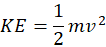
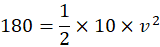
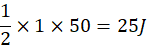
Speed at 0 m = 6 m/s
Work done from graph
Area under force-displacement graph
Triangle (0–1 m)
Rectangle (1–3 m)
Triangle (3–4 m)
Total work

(ii) Speed at 4 m
Final KE

Speed at 4 m ≈ 8.1 m/s
- The applied force is always positive.
Therefore, no negative acceleration occurs.
12. Question

For same velocity,

Moon gravity =  Earth gravity


Answer: 48 m
13. Question
Given:
- Mass = 1000 kg
- Speed at A = 35 m/s
- Between A and B the speed remains constant (35 m/s).
Car moves with uniform speed.
- KE at A

- At C speed becomes zero.
Work done by brakes
Answer: −6.125 × 10⁵ J
(iv) Kinetic energy transforms mainly into heat energy in the brake system (and a little sound).
14. Question
Given:
- Mass = 0.5 kg
- At O:
- PE = 30 J
- v = 0
Total mechanical energy 
At P: PE = 20 J
KE = 30 − 20 = 10 J



At Q PE = 30 J, KE = 0
At R PE = 40 J > Total energy (30 J)
Hence the ball cannot reach R.
Answers:
- P → 6.3 m/s
- Q → 0 m/s
- R → Cannot reach
15. Question
Given:

(i) Velocity before hitting sand
(ii) Depth of depression
Potential energy lost 
Work done against sand

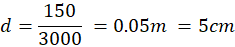
Answer: Depth = 0.05 m = 5 cm.
FAQs
What is Chapter 7 of Class 9 Science?
Chapter 7 of the new Class 9 Science textbook is Work, Energy, and Simple Machines. It introduces students to important concepts related to work, energy, energy transformations, and simple machines.
What are the important topics in Class 9 Science Chapter 7?
The important topics include work, energy, forms and transformations of energy, and simple machines, along with the related concepts and applications covered in the textbook.
What is work in science?
In mechanics, work is associated with a force producing displacement of an object. The exact conditions and examples should be understood from the NCERT chapter.
What is energy?
Energy is associated with the ability of an object or system to perform work. It can exist in different forms and can be transformed from one form to another.
What are simple machines?
Simple machines are basic mechanical devices that help make tasks easier by modifying the magnitude or direction of an applied force.
How should I prepare Class 9 Science Chapter 7?
Read the NCERT chapter carefully, understand the concepts and examples, practise the textbook questions and activities, and revise the important formulas and units. Use NCERT Solutions to check your answers and understand the steps used to solve problems.
Are there numerical questions in Chapter 7?
If the current textbook includes numerical problems, practise them by identifying the given quantities, selecting the appropriate formula, substituting the values, and writing the answer with the correct unit.
Is Chapter 7 important for the Class 9 Science exam?
Yes. Students should understand the concepts, applications, numerical problems, and activities included in the chapter rather than relying only on memorisation.