
NCERT Solutions for Class 9 Science Chapter 6, How Forces Affect Motion, help students understand how forces influence the motion and behaviour of objects. This chapter from the new NCERT textbook, Exploration: A Textbook of Science for Grade 9, introduces students to the effects of forces and their role in everyday physical phenomena.
Students explore ideas related to force, changes in motion, balanced and unbalanced forces, and the relationship between force and the motion of objects. The chapter connects scientific concepts with familiar situations and helps students develop an understanding of how forces act on objects. These NCERT Solutions provide clear explanations for textbook questions and activities and help students prepare effectively for examinations.
(For exact question see NCERT Textbook)
1. Question
Two forces acting on the barbell are:
- Weight (gravitational force) acting downward.
- Upward force exerted by the weightlifter.
If the weightlifter keeps the barbell steady, these forces are balanced (equal in magnitude and opposite in direction), so the net force is zero.
Answer: Yes, the forces are balanced when the barbell is held steady.
2. Question
When the arms tilt towards the front (towards you), the forces exerted by players R and S are not balanced.
The player whose arm remains more upright exerts the larger force. In the figure, the arms tilt towards the side of player S, indicating that player R exerts a greater force.
Answer:
- The forces are not balanced.
- Player R exerted the larger force.
3. Question
Answer: No.
If an object moves with a constant velocity, its acceleration is zero. Therefore, the net force acting on it is zero (Newton’s first law).
4. Question
(i) Object remains at rest if at rest.
Possible
(ii) Object keeps moving with a constant velocity if already moving.
Possible
(iii) Object is moving with a constant acceleration.
Not possible
Since acceleration requires a non-zero net force.
Answer: (i) and (ii) are possible; (iii) is not possible.
5. Question
Answer: When all the forces acting on an object balance each other, the net force becomes zero.
Example: A book resting on a table.
- The gravitational force (weight) acts downward.
- The normal reaction force exerted by the table acts upward.
These two forces are equal and opposite, so the net force on the book is zero, and the book remains at rest.
Another example is a car moving with constant velocity, where the driving force is balanced by frictional and air resistance forces.
6. A toy car of mass 100 g is moving with a constant velocity of 0.5 m s⁻¹. What is the net force acting on the toy car?
Answer: Since the toy car is moving with constant velocity, its acceleration is zero.
Using Newton’s Second Law:

Here,

Therefore,

Net force acting on the toy car = 0 N
7. Question
Answer: According to Newton’s Second Law,

For the same acceleration  , the force required is directly proportional to the mass
  .
.
Therefore, the child with the greater mass requires a larger force to produce the same initial acceleration.
8. Question
Answer: Bubble wrap or hay increases the time of impact when the package experiences a shock or fall. Since the change in momentum occurs over a longer time, the force acting on the glass decreases.
Thus, bubble wrap and hay act as cushions, reducing the impact force and protecting the glass items from breaking.
Concept: Impulse = Force × Time. Increasing the time of impact reduces the force.
9. Question
Answer: When water is expelled from the pipe at high speed, it exerts a force in the forward direction. According to Newton’s Third Law of Motion, the water exerts an equal and opposite force on the pipe.
This backward force (recoil) makes the pipe difficult to hold, so the fireperson sometimes struggles to control it.
10. Question
Answer: A spacecraft can change its velocity by firing its rockets or thrusters.
When the spacecraft ejects gases backward at high speed, the gases exert an equal and opposite force on the spacecraft (Newton’s Third Law), causing it to accelerate and change its velocity.
Therefore, the spacecraft changes its velocity by using rocket engines/thrusters that expel gases backward.
NCERT Exercise Solution
(For exact question see NCERT Textbook)
1. Question
Since the table is moving with constant velocity, the net force on it is zero.
Answer:
(equal in magnitude and opposite in direction to the applied force)
2. Question
(i) If no net force is applied, the velocity of the ball will:
Remain the same
Answer: Remain the same
(ii) If a net force is applied in the direction of motion, the magnitude of velocity will:
Increase
Answer: Increase
(iii) If a net force is applied opposite to the direction of motion, the magnitude of velocity will:
Decrease
Answer: Decrease
3. Question
Block P
Forces acting are 5 N and 4 N in opposite directions.
Net force on P:

So, P experiences a net force of 1 N.
Block Q
Q is moving with constant velocity; hence acceleration is zero and net force is zero.
So, Q does not experience a net force.
Correct option: (i)
Answer:

4. Question
- 95 oarsmen row forward:

- 5 oarsmen row in the opposite direction:

Net force:

Answer:  in the forward direction.
5. When a net force acts on an object
According to Newton’s second law, an object accelerates in the direction of the net force, and acceleration is directly proportional to the force.
Correct option: (iv)
Answer: 
6. Question
- Object A: Straight line → constant velocity → no net force.
- Object B: Horizontal line → at rest → no net force.
- Object C: Curved graph → changing velocity → acceleration present → net force acts.
- Object D: Straight line with negative slope → constant velocity → no net force.
Correct option: (iii) Object C
Answer: 
7. Question
Yes, the boat will move.
When the sailor jumps forward, he exerts a backward force on the boat. By Newton’s third law of motion, the boat experiences an equal and opposite force and moves backward.
Answer:
Yes, the boat moves backward due to Newton’s third law of motion.
8. Question
A soft-landing mat or sand bed increases the time taken by the athlete to come to rest. Since

increasing the stopping time decreases the impact force, reducing the chance of injury.
Answer:
A landing mat or sand bed increases the time of impact, thereby reducing the force on the athlete and preventing injuries.
9. Question
According to Newton’s third law, during the collision both carts exert equal and opposite forces on each other.
Answer: (iv) The loaded cart and the empty cart both exert an equal magnitude of force on each other.
10. Question
From Fig. 6.40, acceleration decreases inversely with mass, implying:

Therefore, the force-mass graph is a horizontal straight line, parallel to the mass axis.
Answer: A horizontal line showing constant force.
11. Question
Given:
- Mass,

- Initial velocity,

- Final velocity,
- Time,

Acceleration:

Force:

Answer: 
12. Question
Given:
- Mass,

- Initial speed,

- Final speed,

- Distance,

Using:
Force:

Magnitude of stopping force:

13. Question
Given:
- Force,

- Mass,

- Final speed,

- Initial speed,
Acceleration:

Time:

Answer: 
14. Question
Given:
- Mass

- Initial velocity
- Frictional force = 7 N
- Additional opposing force = 3 N
Total opposing force: 
Acceleration:
Using
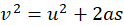



15. Question
Given:  and
and 
Therefore,
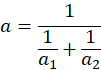
Combined mass:
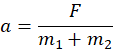
Acceleration when both are together:
16. Question
Although the forces between the bar magnet and compass needle are equal and opposite, their masses and constraints are different.
The compass needle is light and free to rotate, so it moves easily. The bar magnet is heavier and usually held firmly in the hand, so it does not move appreciably.Answer: The compass needle moves because it is free to rotate and has very small mass, whereas the bar magnet is heavier and constrained, so the equal and opposite force does not produce noticeable motion
Common Mistakes
Focus on:
Giving examples without explaining the effect of the force
Thinking that force is required only to keep an object moving
Confusing balanced and unbalanced forces
Ignoring the direction of forces
Forgetting that several forces can act on an object simultaneously
Assuming that every applied force produces the same effect
Confusing force with motion
FAQs
What is Chapter 6 of Class 9 Science?
Chapter 6 is How Forces Affect Motion. It explains how forces act on objects and how they can influence the motion and behaviour of objects.
What is force?
Force is an interaction that can affect the motion or state of an object. It can involve a push, a pull, or another interaction between objects.
What are the effects of force?
A force can cause changes such as starting or stopping motion, changing the speed or direction of an object, or changing its shape, depending on the situation discussed in the textbook.
What are balanced forces?
Balanced forces are forces whose effects cancel each other so that the net force is zero.
What are unbalanced forces?
Unbalanced forces result in a non-zero net force and can cause a change in the motion of an object.
What are the important topics in Chapter 6?
Important topics include force, effects of force, multiple forces, balanced and unbalanced forces, net force, and the relationship between forces and motion.
How should I prepare Class 9 Science Chapter 6?
Read the NCERT chapter carefully, understand the examples and activities, practise identifying forces in different situations, and solve the textbook questions using the NCERT Solutions for checking.
Are NCERT Solutions enough to study Chapter 6?
NCERT Solutions are useful for checking textbook answers and understanding difficult questions, but students should also study the textbook, activities, examples, and concepts independently.
Is Chapter 6 important for Class 9 Science?
Yes. Understanding forces and their effects on motion provides an important foundation for studying mechanics and related concepts in science.